Raised on Sweet Tea and Jesus
A Thoughtful Embroidery Designer’s First Look
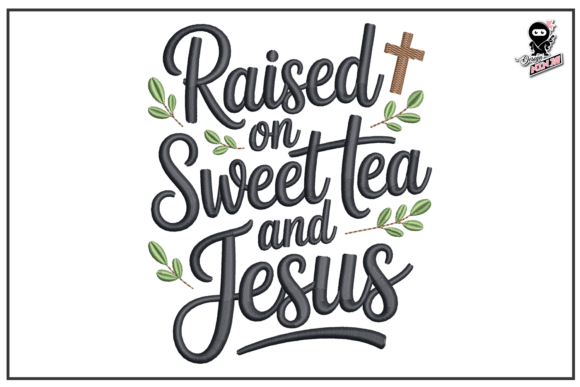
As someone who’s digitized and stitched hundreds of designs for boutique apparel—especially sweatshirts, hoodies, and lifestyle-focused collections—I approached Raised on Sweet Tea and Jesus with both curiosity and practical scrutiny. The name alone signals warmth, regional charm, and quiet faith—ideal for a Religion Faith-aligned but broadly relatable aesthetic. Visually, it reads as gently rustic yet polished: soft curves in the lettering, subtle flourishes on the “S” and “J,” and balanced spacing that avoids overcrowding. It’s not overly ornate, nor is it minimal—it lands in that sweet spot where machine embroidery design feels intentional, personal, and commercially versatile.
How It Performs Across Apparel Types
Sweatshirt embroidery is where Raised on Sweet Tea and Jesus truly shines. On neutral heather grey or oatmeal French terry, the design reads cleanly without needing heavy underlay—its moderate stitch density holds well on mid-weight fleece. For hoodie design, I’d place it centered on the chest (2.5–3” wide) for immediate impact, or scaled slightly smaller for sleeve accents on oversized styles. It also works beautifully as a back design on relaxed-fit hoodies—just ensure your hoop size accommodates the full width, and test placement on a garment mockup first.
On t-shirts, especially lightweight cotton or tri-blends, I recommend using a light tear-away stabilizer and checking thread color contrast carefully. The script has delicate transitions—so high-contrast thread (like navy on cream or charcoal on ivory) helps preserve legibility. For dark garments, avoid pastel threads unless you’re layering with a white underlay; the design’s charm relies on clarity, not subtlety.
Denim jackets? Yes—but only on smoother, non-stretch panels (think upper back or chest). Skip the curved yoke or sleeve seams unless you’ve tested on scrap denim with appropriate cut-away stabilizer. Tote bags made from canvas or medium-weight cotton handle Raised on Sweet Tea and Jesus effortlessly—great for seasonal bundles or gift-ready handmade product sets.
Visual Mood Meets Brand Strategy
This isn’t a bold, statement-making emblem—it’s a warm, grounded whisper. That makes it ideal for custom apparel brands building trust through authenticity rather than hype. Think small shop product lines centered around Southern heritage, slow living, or faith-rooted self-expression. When styled thoughtfully (e.g., paired with linen-blend tees or organic cotton hoodies), Raised on Sweet Tea and Jesus reinforces visual consistency across your small shop product catalog—and supports buyer trust by signaling craftsmanship over mass production.
For Etsy sellers and lifestyle-focused creatives, it adds instant narrative to your printable mockup library. Pair it with soft natural lighting, vintage textures, and muted props, and the design becomes part of the story—not just decoration. Social media graphics benefit too: its legible script scales well for Instagram carousels or Pinterest pins, especially when layered over lifestyle photos instead of plain backgrounds.
Where to Use It—And Where to Pause
Use Raised on Sweet Tea and Jesus confidently on stable, low-stretch fabrics: brushed cotton, mid-weight fleece, twill, and structured canvas. Avoid dense placements on ribbed fabric (like hoodie cuffs or waistbands)—the texture can distort fine lettering. Likewise, steer clear of curved surfaces like shoulder seams or deep armholes unless you’ve done a physical test run.
Small chest placement works well—around 2.25” wide fits most adult unisex sweatshirts without feeling cramped. But don’t assume automatic success on stretchy fabric: always test on scrap cut from your actual garment batch. Fleece nap can also eat detail, so consider a topping stabilizer if your final piece has a plush surface.
Design Integrity & Commercial Readiness
What elevates Raised on Sweet Tea and Jesus beyond trend-chasing is its balance of personality and professionalism. It doesn’t scream “religious merchandise”—it invites quiet recognition. That nuance matters for commercial embroidery projects where brand identity hinges on tone, not just theology. When customers see this on a cozy seasonal outfit or a minimalist tote, they read intentionality—not cliché.
It strengthens product recognition without demanding attention: repeat buyers will begin to associate the script’s rhythm and warmth with your boutique brand. And because it’s neither overly decorative nor starkly simple, it photographs well across contexts—from flat-lay Etsy listings to dynamic lifestyle shots.
Practical Notes Every Embroidery Designer Should Check
- Test on scrap fabric pulled from your exact garment batch—fabric texture shifts everything.
- Confirm stabilizer choice: light cut-away for knits, tear-away for wovens, topping for napped surfaces.
- Review thread colors against your base fabric—not just on screen. A warm taupe may read muddy on heather grey until stitched.
- Verify hoop size compatibility before digitizing adjustments. Some versions may require larger hoops for optimal tension.
- Inspect stitch density: look for tight clusters that could pucker on lightweight material. If present, reduce density slightly in your editing software.
- Always test on a garment identical to your production run—including wash-and-dry cycles if pre-shrinking is part of your process.
- Compare placement options physically—pinning or iron-on transfer helps visualize scale before hooping.
- Double-check Creative Fabrica embroidery product details: confirm file formats included, recommended stitch count range (if listed), and licensing terms for finished product resale.
In short, Raised on Sweet Tea and Jesus isn’t just another embroidery file—it’s a thoughtful tool for designers building meaningful, market-ready apparel. Whether you're curating a holiday capsule collection or launching your first digital embroidery file-supported line, this design earns its place through quiet confidence, consistent execution, and real-world wearability.