Powered by Jesus and Coffee
First Impression: Whimsical, Warm, and Instantly Relatable
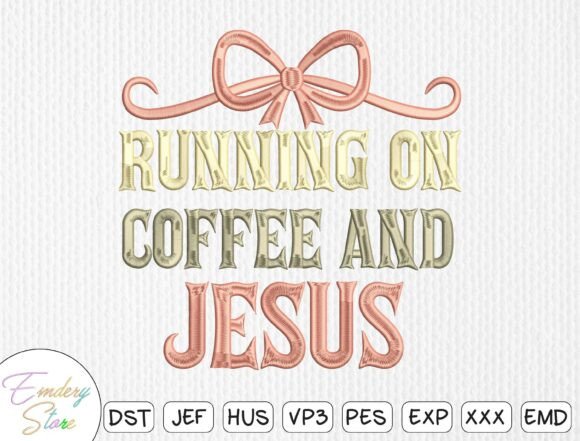
As an embroidery designer who’s prepped over 200 craft fair booths—and watched thousands of shoppers pause, smile, and reach for a product—my gut reaction to Powered by Jesus and Coffee is immediate: it’s charming, approachable, and emotionally resonant. It lands somewhere between farmhouse faith and modern wit—neither preachy nor ironic, but warmly human. That balance is rare. In a crowded market of religious embroidery designs, this one doesn’t shout doctrine; it nods with a wink and a steaming mug. For craft fair sellers, that means faster eye contact, longer dwell time, and higher emotional buy-in.
Where It Shines: Product-by-Product Real-World Review
Tote bags: A standout. The phrase reads cleanly at 4–5 inches wide—ideal for the center panel of a medium canvas tote. Paired with natural linen or oatmeal cotton, Powered by Jesus and Coffee feels handmade, intentional, and giftable. Customers love carrying their values (and caffeine) visibly.
Aprons: Excellent placement above the pocket or centered on the bib. The rhythm of “Jesus and Coffee” fits apron proportions naturally—no awkward stretching or compression needed. It signals warmth, service, and quiet conviction—perfect for bakers, baristas, and church volunteers alike.
Tea towel embroidery: Works beautifully in a top-corner or lower-hem placement. On textured flour-sack towels, the design’s playful energy softens just enough to feel cozy—not cluttered. Just be mindful: avoid dense stitch areas near hems where repeated folding could stress thread.
Embroidered patches: Highly effective as a sew-on or iron-on option. At 2.5–3 inches, the lettering remains legible, and the dual-theme concept makes it a conversation starter. Great for small shop products like denim jackets, backpacks, or kids’ lunchboxes.
Caps and curved surfaces: Proceed with caution. The balanced phrasing works best on front panels—but tight curves distort small letterforms. If using on caps, test the Powered by Jesus and Coffee embroidery file on scrap fabric first, and consider simplifying punctuation or spacing for clarity.
Pillow covers & fabric pouches: Ideal scale and tone. Centered on a 16x16 pillow cover, it reads as both decorative and meaningful—elevating a simple item into a curated handmade product. On drawstring pouches (great for gift sets), it adds personality without overwhelming.
What Makes It Sell—Beyond the Stitch
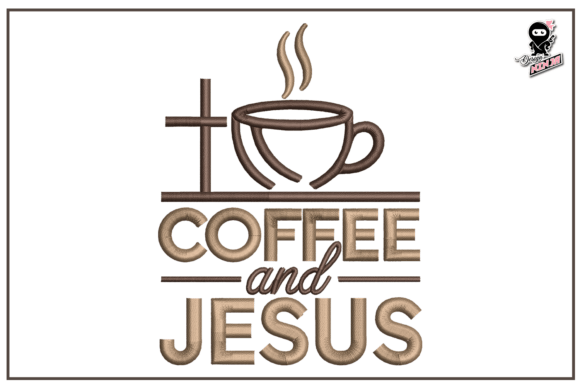
This isn’t just another machine embroidery design—it’s a micro-branding tool. Powered by Jesus and Coffee performs strongly across multiple buyer psychographics: the faith-driven shopper seeking gentle expression, the coffee-loving creative entrepreneur, and the Etsy seller looking for evergreen, non-seasonal design assets. It photographs well—clean lines, balanced negative space, and clear contrast make it pop in natural light. That translates directly to stronger Etsy listings, better printable mockups, and more confident booth displays.
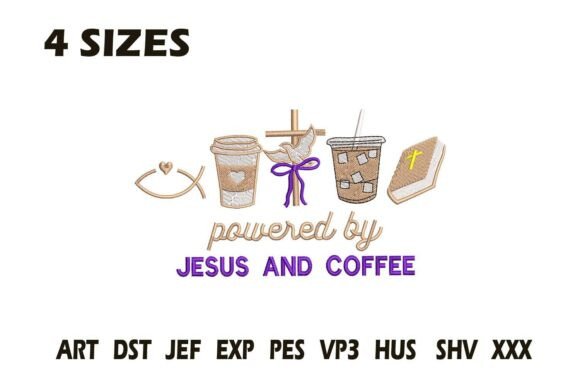
In person, it stands out because it’s *recognizable* before it’s fully read. The alliteration, rhythm, and familiar icons (cross + mug) create instant pattern recognition—even from 6 feet away. That’s gold at a craft fair, where attention spans are measured in seconds.
Production Notes Every Embroidery Designer Should Check
- Stitch density matters: Review the embroidery file for tight fills or overlapping letters—especially around “&” or lowercase “j” and “c.” High density can cause puckering on lightweight fabrics or stiffening on tea towels.
- Lettering legibility: Small caps or script variants may lose clarity below 3 inches. Stick to clean, slightly bold sans-serif or friendly serif fonts if offering scaled-down versions for patches or pouches.
- Fabric texture & color: On dark fabric, confirm thread colors provide strong contrast—especially for “Jesus,” which carries weight. On thick or napped fabrics (like terry cloth towels), use cutaway stabilizer and reduce top tension slightly.
- Hoop size & placement: Measure your most-used hoop before digitizing. A 5x7” hoop comfortably fits the full phrase; smaller hoops may require splitting the design—avoid unless absolutely necessary.
Booth Strategy & Buyer Engagement Tips
At your craft fair table, group Powered by Jesus and Coffee items intentionally: a folded tea towel beside a matching embroidered apron and a mini canvas tote. Add a small ceramic mug nearby—not for sale, but as visual reinforcement. This creates narrative cohesion and invites customers to imagine the lifestyle behind the design.
For Etsy sellers and digital shops: pair your listing with at least one real mockup (not just a template)—show the design stitched on actual linen, not stock photos. Include a short line in your description like, “Designed for everyday faith and daily brew”—it reinforces tone without over-explaining.
And remember: this design thrives on authenticity. Don’t over-polish it. Let the handmade quality show—the slight variation in thread sheen, the organic drape of fabric, the thoughtful placement. That’s what makes Powered by Jesus and Coffee feel personal, not mass-produced.
Final Thought: A Design That Earns Its Place
In my 12 years designing for handmade markets, I’ve seen trends fade fast—but sincerity, humor, and warmth endure. Powered by Jesus and Coffee delivers all three. It’s not flashy, but it’s memorable. Not complex, but it’s considered. As a Religion Faith embroidery design, it avoids cliché. As a commercial embroidery asset, it’s versatile, scalable, and emotionally intelligent. Whether you’re stitching it on a market bag for Saturday morning or uploading it as a digital embroidery file for global makers, it carries quiet confidence—and that’s exactly what sells.
Before cutting your first production run: test the design on scrap fabric, check thread contrast across 3 fabric colors, verify spacing between words, and confirm commercial licensing terms. Then—brew your own coffee, say a quick prayer, and start stitching.