Nativity Star: An Embroidery Designer’s Review for Business Merch
First Impressions: A Guiding Light for Holiday Branding
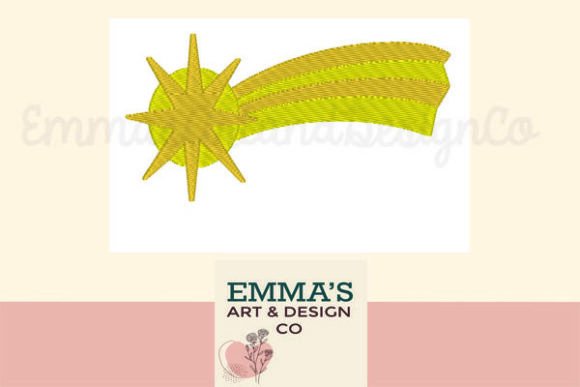
When I first opened the Nativity Star digital embroidery file, the immediate feeling was one of quiet elegance. This isn’t a loud, cartoonish holiday motif. It’s a golden shooting star with a clear sense of direction—the Star of Bethlehem rendered as a radiant, sweeping arc. The description says it all: “Shine bright this holiday season with the Star of Bethlehem embroidery design. Symbolizing the guiding light that led the Wise Men to the birthplace of Jesus, this golden shooting star adds a radiant” touch. From a small business perspective, that “radiant” quality is exactly what you want in a seasonal brand asset. It feels professional, polished, and versatile enough to sit on a café apron, a boutique tote bag, or a handmade Christmas ornament. The visual personality leans classic with a hint of modern simplicity—not overly decorative, but detailed enough to catch the light. For me, that balance is key: it gives the design a premium feel without being too fragile to stitch well on a variety of fabrics.
Real-World Business Applications: More Than a Christmas Design
I immediately saw Nativity Star as a workhorse for commercial embroidery projects, not just a once-a-year decoration. Here’s where it truly shines for small business owners, apparel decorators, and Etsy sellers:
- Staff uniforms and aprons. A bakery or café can use the star as a left-chest accent on a dark apron, subtly nodding to the holiday season without a full-on Santa motif. It’s professional enough for year-round use if your brand identity leans into celestial or guiding-light imagery.
- Embroidered patches. The design screams to be turned into a standalone patch. A boutique clothing brand could add a small woven-edge patch to the sleeve of a flannel shirt, or a florist could stitch it onto a canvas tote bag as a seasonal gift with purchase.
- Cap embroidery. The forward-facing sweep of the shooting star works beautifully on the front of a dad cap or a structured snapback. Just be mindful of the curve—I’ll get to that later.
- Tote bags and product packaging accents. A handmade soap maker or candle brand could use the Nativity Star as a tiny, glittering mark on a linen pouch or a fabric gift tag. It transforms a simple product into a branded experience.
- Customer gifts and event merch. For a church fundraiser, a Christmas market booth, or a holiday pop-up, this design on a small zipper pouch, a tea towel, or a notebook cover becomes an instant keepsake.
In every case, the design’s golden thread choice is crucial. That metallic sheen elevates the perceived value of the finished product. When I test stitch this, I’ll likely use a high-quality polyester embroidery thread that mimics the look of metallic without the tension headaches. The result? A product that looks far more expensive than it costs to produce.
Patch Potential: The Star That Works Small and Large
One of the first things I do with any machine embroidery design is evaluate its patch potential. Nativity Star passes that test with flying colors—but only if you respect the details. The star has a comet-like tail, and that tail holds the delicate linework that gives the design its sense of motion. If you shrink it too small, those fine lines will close up and turn into a blurry blob. I’d recommend keeping the patch no smaller than 2.5 inches wide for a clean stitch-out. At that size, the star maintains its sharp points and the trailing sparks remain distinct. For a larger back patch on a denim jacket or a canvas tote, you can scale it up to 4 or 5 inches and really let the golden sweep dominate the space.
For patch makers, the Stitch density here is a key consideration. The design likely has a mix of satin stitches for the star body and some lighter fill areas in the tail. You’ll want to use a sturdy cutaway stabilizer and a medium-weight fusible backing if you’re making iron-on patches. The result is a patch that feels substantial and holds its shape through washing and wear.
Brand Identity Impact: How a Star Builds Trust and Recognition
When a small business adds a consistent embroidered mark to its merchandise, something magical happens. The Nativity Star doesn’t just decorate—it signals intention. A customer who receives a hand-stitched holiday ornament from your shop, or sees a barista wearing a star-adorned cap, will subconsciously associate your brand with warmth, guidance, and celebration. That’s the power of brand identity tied to a symbol with deep cultural resonance.
For a craft business or handmade product seller, this design can become a signature seasonal asset. Imagine a line of Christmas candles with the star embroidered on a small fabric band around the jar. Every time the customer sees it, they’ll remember the guiding light concept—and your brand. This goes beyond a simple decoration; it’s a visual consistency tool that builds customer trust and recognition over time. The star’s simplicity also means it pairs well with existing logos or monograms. I often advise clients to use it as a secondary mark, smaller than the main logo, placed on a sleeve, a hem, or a pocket. It adds a layer of professionalism without cluttering the design.
Practical Embroidery Designer Notes: What I Check Before Production
Before I ever send a design to the machine, I run through a mental checklist. Here’s how I’d approach Nativity Star:
- Test in black and white first. I always print a monochrome version of the stitch file to check for density and potential gaps. The star’s success relies on contrast, so I want to see if the outline holds up without color.
- Check small-patch viability. I’ll stitch a sample at 2 inches, 2.5 inches, and 3 inches to find the sweet spot. Anything under 2 inches and I’d expect the star’s rays to lose definition.
- Thread color contrast is non-negotiable. On a dark uniform—navy, forest green, charcoal, or black—the golden thread pops brilliantly. On a light cream or white fabric, the gold may wash out. I’d recommend a darker gold or a double layer of thread if the fabric is pale. For best results, match the thread to the brand’s metallic accent color.
- Inspect spacing and pathing. The tail of the shooting star likely has a few narrow satin columns. I’ll look for any trims or jump stitches that could catch on fabric. A well-digitized embroidery file will have clean connections, but it’s worth a close look.
- Confirm hoop size. Since the product description doesn’t specify exact dimensions, I’ll measure the design’s bounding box before loading it. Most commercial hoops will handle a 4x4 or 5x7 inch design, but if you’re planning a large back piece, you’ll need a larger hoop.
- Test on real fabric. I always stitch on the exact garment or material the client will use—whether it’s a thick canvas tote, a soft cotton tee, or a structured cap. The stabilizer choice changes accordingly.
- Create a mockup for client approval. A printable mockup or a digital composite of the design on the actual product saves so much back-and-forth. I’ll place the star on a photo of the apron or cap and send it for approval before any thread touches fabric.
- Compare beside other design assets. If the small business already has a logo or a monogram, I’ll lay the star next to it to ensure the styles harmonize. The Nativity Star’s classic lines should blend well with serif fonts or simple sans-serif logos.
Where to Use Caution: Sizing, Fabric, and Frequent Washing
No design is perfect for every scenario, and Nativity Star comes with a few caveats. The most important is fabric texture. If you’re stitching on a heavily textured or napped fabric—like a thick fleece, a loosely woven linen, or a terry cloth towel—the fine tail details may get lost. I’d use a topper in those cases, or simply avoid the design on such fabrics. For caps, the curved front presents a challenge: the star’s long tail may wrap around the curve and appear distorted. I’d recommend placing the design on the front panel of a structured cap and keeping the size moderate.
For items that will face frequent washing, like a work shirt or a kid’s backpack, the metallic-effect thread can be a weak point. I’ve had better luck with high-sheen polyester threads that mimic gold without the brittleness of real metallic thread. If you do use a metallic thread, slow down your machine speed and use a larger needle to reduce friction. Also, remind the client that the finished product should be washed inside out and air-dried to preserve the sparkle.
Another point: small lettering or intricate outlines are not part of this design, but if you plan to add a business name underneath the star, be extra careful with tiny text. The star itself is clean, but any text you add must be large enough to read and not conflict with the star’s sense of movement.
The Commercial Advantage: Why This Design Makes Sense for Merch
From a business standpoint, Nativity Star is a smart addition to your digital embroidery file library. Christmas-themed products have a limited selling window, but a design this elegant can be marketed as a “celestial” or “guiding light” motif for far longer. I’ve seen savvy Etsy sellers use similar designs on wedding accessories, baby shower gifts, and spiritual-themed merchandise. The star’s symbolism is broad enough to stretch beyond December, which means your commercial embroidery investment pays off longer.
Additionally, the design’s relatively low stitch density (at least from what I can guess without the exact number) means faster stitch-outs and less thread consumption. That’s a direct profit boost for small business merch production. When you’re embroidering dozens of patches or tote bags, every minute and every meter of thread counts.
Finally, the Nativity Star works as a brilliant upsell. A customer who orders a branded apron might happily add a matching star-embroidered tea towel or cap if you show them the coordinated set. By offering this design as a complementary accent, you increase the average order value and strengthen the visual cohesion of your brand’s product line.
Final Thoughts on Adding Nativity Star to Your Design Library
As an experienced embroidery designer, I’m always looking for design assets that balance beauty with practicality. Nativity Star checks both boxes. It’s visually arresting, symbolically rich, and mechanically straightforward—provided you respect the size limits and fabric guidelines. For small business owners, it’s a chance to inject a premium, handcrafted feel into holiday merchandise without sacrificing consistency or scalability. Before you stitch, always confirm the commercial licensing terms, check the exact hoop dimensions, and run a test sample. But if you’re looking for a Christmas embroidery design that transitions seamlessly into branded patches, uniforms, and gift items, this golden shooting star is a guiding light worth following.