Jesus Valentine Collection
A Designer’s First Look: Warm, Reverent, and Surprisingly Versatile
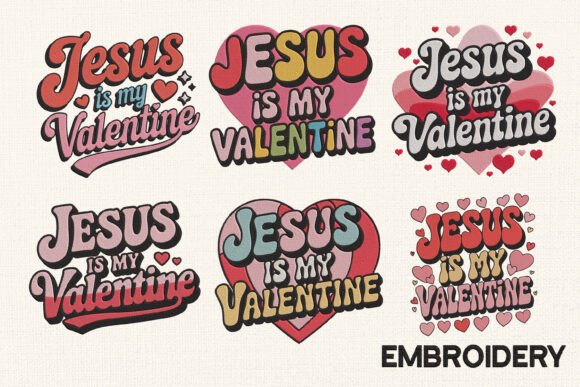
When I opened the Jesus Valentine Collection embroidery file, I didn’t see clichéd hearts or cartoonish Cupids—I saw a quiet balance: soft script lettering, gentle floral flourishes, and a subtle cross motif woven into the composition. It feels less like a seasonal gimmick and more like a thoughtful, handmade gesture—ideal for faith-centered gifting without leaning into overt religiosity. As someone who tests dozens of machine embroidery designs each month for client work and small-batch production, this one stood out for its restraint. The layout is compact but not cramped; the curves flow naturally, and the negative space invites breath—not clutter.
Real-World Use Case: A Linen Tea Towel for a Local Boutique
Last week, I stitched the Jesus Valentine Collection onto a natural linen tea towel for a downtown gift shop launching their “Love & Light” Valentine S Day line. We chose a pale oat-colored fabric with ecru thread—no metallics, no high-contrast pop. What surprised me was how well the design held up on textured linen: the satin stitch borders stayed crisp, the fill stitch areas remained even (no puckering), and the delicate vine elements didn’t vanish into the weave. Customers responded to it immediately—not as “churchy” or “too serious,” but as warm, intentional, and quietly meaningful. That tells me this isn’t just a holiday embroidery piece—it’s a design that supports brand voice, not overrides it.
Where It Shines—and Where to Pause
The Jesus Valentine Collection excels in mid-to-large format applications where clarity and calm matter: sweatshirt embroidery (left chest or back yoke), pillow covers for nursery decor, embroidered patches sewn onto denim jackets, and personalized baby blankets. Its moderate stitch density makes it forgiving on stable fabrics like cotton twill, quilting cotton, and medium-weight knits—especially when paired with tear-away + cut-away stabilizer combo.
But here’s where I’d advise caution:
- Small hoop sizes: The full composition won’t fit cleanly under a 4x4 hoop without scaling down—and shrinking risks losing definition in the script and floral details.
- Stretchy fabric: On lightweight jersey or ribbed knit t-shirts, test first. The design’s balanced weight helps, but you’ll need excellent stabilization and possibly reduced top tension.
- Dark or heavily textured surfaces: On black towels or burlap-style aprons, the fine inner lines may soften. Consider slightly heavier thread or a light outline stitch if clarity is critical for your finished product.
- Curved surfaces: Caps or curved tote bag handles require re-hooping and careful placement—this design doesn’t wrap easily. Stick to flat panels unless you’re experienced with distortion compensation.
Design Integrity Meets Commercial Practicality
As an Etsy seller and craft business owner myself, I pay close attention to how a machine embroidery design affects perceived value—and trust. The Jesus Valentine Collection reads as handmade, not mass-produced. There’s no over-digitized sharpness, no unnatural symmetry. That authenticity translates directly to customer engagement: buyers notice the care in the curve of the “J,” the slight variation in petal spacing, the way the cross integrates rather than interrupts. It elevates a simple kitchen towel from functional to giftable. It gives a custom apparel order emotional resonance—without requiring explanation.
For boutique branding or small shop merchandise, this design works especially well when paired with minimalist packaging and cohesive mockups. Try it in a printable mockup series: same design, three fabric backgrounds (cream linen, heather gray sweatshirt, ivory baby onesie). You’ll see instantly how adaptable it is across product categories—without needing multiple variations.
Practical Designer Notes Before You Stitch
- Always test on scrap fabric first—especially if using textured, dark, or stretchy materials. Note how the fill stitch settles and whether thread tension needs adjusting.
- Check thread color contrast before finalizing. This design relies on subtlety—not bold contrast—so mismatched thread can mute its warmth.
- Review stitch density visually in your embroidery software. If it looks overly dense in tight corners, consider simplifying minor flourishes for high-wear items like tote bags or aprons.
- Confirm hoop size compatibility. While not specified in the description, assume standard 5x7 or larger is ideal. Don’t force it into a tiny hoop without verifying detail retention.
- Inspect small details at 200% zoom: letter junctions, petal tips, cross endpoints. These are where digitizing quality shows—or falters.
- Test in black-and-white mockups to assess visual hierarchy and legibility across light/dark backgrounds.
- Use proper stabilizer: Medium-weight cut-away for knits, tear-away for stable wovens, and fusible + tear-away for lightweight linens.
- Verify licensing before selling finished items or bundling the digital embroidery file. If commercial use isn’t explicitly permitted, don’t assume it’s allowed—even for small-scale craft business use.
Final Thought: A Design That Earns Its Place
The Jesus Valentine Collection isn’t flashy—but it doesn’t need to be. In a market saturated with loud, trend-driven embroidery files, it offers something rarer: quiet confidence. It fits naturally into real projects—baby embroidery, holiday embroidery, custom apparel, embroidered patch collections—without demanding attention. It supports the maker’s voice instead of competing with it. Whether you're preparing a personalized gift, stocking a craft fair table, or building digital embroidery assets for your Etsy shop, this design earns its place by delivering consistency, clarity, and genuine warmth—stitched, not shouted.