Jesus Saves Us: A Designer’s Real-World Embroidery Review
First Impressions: Charm with Quiet Confidence
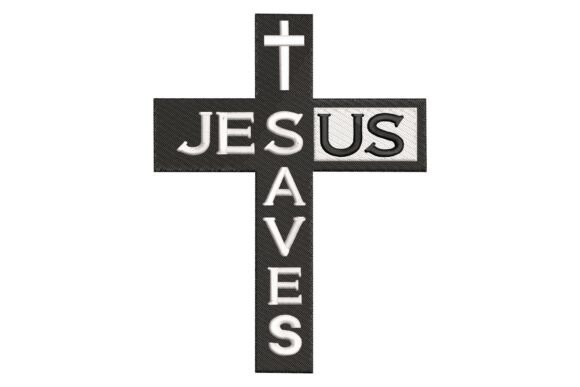
When I opened Jesus Saves Us for the first time, I wasn’t met with heavy symbolism or ornate script — instead, it felt like a warm, approachable whisper. The layout is clean and centered, with balanced letter spacing and subtle curvature in the “S” and “U” that adds softness without sacrificing legibility. It reads as friendly faith — not preachy, not overly decorative, but unmistakably intentional. As a designer who regularly selects embroidery files for client work and small-batch production, I immediately saw its strength: it’s a machine embroidery design that lands somewhere between reverence and relatability. That’s rare — and valuable.
Real-Life Test: Stitching It onto a Linen Tea Towel
Last week, I used Jesus Saves Us on a set of organic linen tea towels for a local boutique’s Easter collection. Why linen? Because it’s unforgiving — loose weave, low stretch, and prone to puckering if stitch density or stabilizer isn’t dialed in right. I paired it with medium-weight tear-away stabilizer and 40-weight cotton thread in navy on ivory fabric. The result? Crisp satin stitch edges, even fill in the curves, and zero distortion. Customers loved how it looked *handmade* — not mass-produced — yet polished enough for retail. That’s the sweet spot: Jesus Saves Us doesn’t scream “religious decor”; it invites quiet recognition. It works equally well on a baby onesie (small hoop, lightweight cutaway) or a heavyweight cotton tote bag (where its scale holds up without overwhelming).
Where It Shines — and Where to Pause
- Custom apparel: Works beautifully on crewneck sweatshirts and relaxed-fit tees — especially when placed left-chest or center-back. The letter height feels intentional, not cramped.
- Baby embroidery: Gentle enough for nursery pillows or burp cloths; just avoid dense fill areas on ultra-thin fabrics unless you pre-test stabilizer layers.
- Holiday embroidery & personalized gifts: Paired with simple cross motifs or olive branches in a printable mockup, it elevates Easter baskets, baptism gifts, or first-communion keepsakes without looking dated.
- Embroidered patch potential: With minor digitizing tweaks (adding border tack-down), it could become a clean, sew-on patch — ideal for craft fairs or Etsy sellers bundling faith-based accessories.
- Caution on curved surfaces: Caps and beanies require careful hooping and possibly reduced stitch density — the “S” and “V” corners can pull slightly on tight curves if tension isn’t adjusted.
- Dark fabric note: On charcoal or black fabric, test thread contrast first. Light gray or ecru thread may read as muddy; off-white or pale gold gives better lift.
What This Design Says About Your Brand — Before a Single Stitch
As an Etsy seller or small shop owner, your embroidery choices shape customer perception faster than product descriptions ever could. Jesus Saves Us signals thoughtfulness — not just in theme, but in execution. It avoids cartoonish trends while staying accessible. That builds trust. When a customer sees it stitched cleanly on a kitchen towel or a child’s backpack, they don’t just see faith — they see care, consistency, and craftsmanship. For handmade product listings, that translates directly into perceived value and repeat orders. And because it’s not overly complex, it scales well across digital embroidery file previews, social media mockups, and physical samples — all critical for creative entrepreneurs building cohesive design assets.
Practical Designer Notes You’ll Actually Use
Before adding Jesus Saves Us to your next batch of finished products or digital offerings, here’s what I do — every time:
- Test on scrap fabric that matches your final project’s weight and texture — especially if using textured fabrics like terry cloth or bouclé.
- Check thread color contrast in natural light *and* under store lighting (if selling wholesale). What reads clearly on screen may blur on dark denim.
- Review stitch density visually in your embroidery software — look for overlapping fills or tight corners that might cause thread breaks on older machines.
- Confirm hoop size compatibility — this design fits comfortably in a 4x4 hoop, but double-check before nesting multiple copies on larger projects.
- Inspect small details at 200% zoom: the curve of the “J”, spacing around “Us”, and how the “V” anchors to baseline — these define clarity.
- Test black-and-white mockups to assess visual weight and balance, especially if offering monochrome product lines.
- Use proper stabilizer — lightweight cutaway for knits, tear-away for stable wovens, and fusible + tear-away for delicate items like baby blankets.
- Verify licensing before selling finished items or reselling the digital embroidery file. If commercial use isn’t explicitly confirmed, reach out to the source — it protects your craft business long-term.
A Final Thought for Makers Who Care About Meaning *and* Craft
Jesus Saves Us isn’t just another Religion Faith embroidery file — it’s a quiet design decision with ripple effects. It fits naturally into daily life: on a coffee-stained apron, a toddler’s sunhat, a linen pillow cover beside a well-worn Bible. Its strength lies in restraint — no excessive flourishes, no forced whimsy, just clear, confident stitching that serves both message and medium. For designers, sellers, and makers who believe handmade product integrity matters, this is the kind of embroidery project that earns loyalty, not just likes. Stitch it with intention, test it with care, and let the simplicity speak.