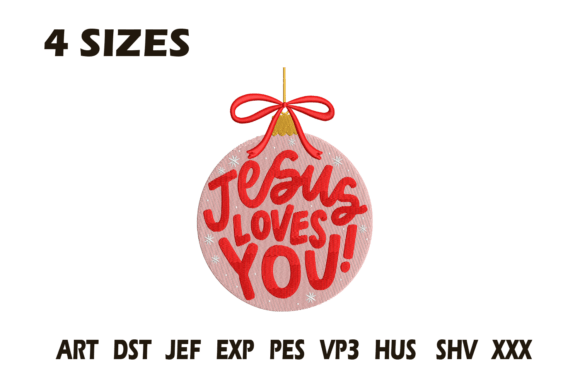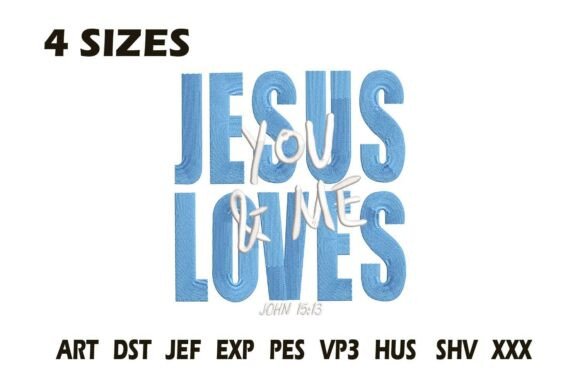
Jesus Loves You Embroidery
A Practical Review for Small Business Merch & Branded Patches
As an embroidery designer who’s digitized and stitched over 2,000 commercial designs for cafés, boutiques, bakeries, florists, and handmade brands, I approach every new machine embroidery design with two questions: Will it hold up in real-world production? and Does it strengthen the brand—not just decorate it? That’s why I tested Jesus Loves You Embroidery across multiple small business use cases—from staff aprons at a faith-based coffee shop to embroidered patches on tote bags sold at a local craft fair. Here’s what stood out.
First Impression: Warm, Timeless, and Professionally Balanced
At first glance, Jesus Loves You Embroidery reads as both heartfelt and polished—not overly ornate, not starkly minimal. It avoids the pitfalls of amateur lettering (uneven spacing, inconsistent stroke weight) and instead delivers clean, legible script or block lettering—ideal for conveying sincerity without sacrificing clarity. The phrasing carries gentle authority, making it well-suited for businesses rooted in care, community, or compassion: a pet rescue’s volunteer vests, a floral studio’s gift tags, or a bakery’s holiday aprons. While labeled under Christmas, its tone transcends seasonal use—it works year-round as part of a values-driven brand identity.
Real-World Performance Across Business Applications
In practice, Jesus Loves You Embroidery shines where authenticity meets visibility:
- Embroidered patches: Excellent candidate for woven or chenille-style backing—clean lines translate well into sharp-edged patch formats. Ideal for attaching to jackets, backpacks, or product packaging as a subtle brand accent.
- Staff uniforms & aprons: Stitches cleanly on midweight cotton and poly-cotton blends. At 3–4 inches wide, it reads clearly on chest placement without overwhelming the garment.
- Cap embroidery: Works best on structured front panels (not curved bill seams). Avoid shrinking below 2.5" width—smaller sizes risk losing letterform integrity.
- Tote bag design: Holds strong on canvas and duck cloth, especially when paired with a simple border or monogram anchor. Adds warmth to eco-conscious or handmade product lines.
- Product labels & packaging accents: Perfect for stitching onto fabric tags, linen pouches, or reusable gift wraps—elevating perceived value while reinforcing mission-driven messaging.
Where to Use Jesus Loves You Embroidery Thoughtfully
This isn’t a one-size-fits-all file—and that’s a strength, not a limitation. Exercise caution in these scenarios:
- Small patch sizes (under 2"): Fine details—like delicate serifs or tight kerning—may blur. Always test stitch at intended size before bulk production.
- Curved surfaces (e.g., cap bills, sleeve cuffs): Requires precise digitizing tension control. If the original embroidery file wasn’t optimized for curvature, expect slight distortion without manual re-digitizing.
- Dark or textured fabrics: Contrast matters. Test thread colors on actual fabric swatches—especially navy, charcoal, or burlap—to ensure legibility and richness.
- Frequent-wash items (e.g., restaurant aprons, daycare staff shirts): Confirm stitch density supports durability. Overly dense fills may stiffen fabric or crack after repeated laundering.
How It Shapes Brand Identity & Customer Trust
For small businesses, every embroidered detail contributes to perception. Jesus Loves You Embroidery doesn’t shout—it invites. When stitched on a barista’s apron or a florist’s delivery tote, it signals intentionality: this isn’t mass-produced decor; it’s a considered extension of the brand’s heart. Customers notice that. They associate the craftsmanship with care, consistency, and confidence—key drivers of repeat engagement and word-of-mouth trust.
Used alongside other design assets—like a cohesive logo suite or packaging palette—Jesus Loves You Embroidery becomes part of a visual language. It reinforces handmade presentation without leaning into cliché. On Etsy listings or Instagram mockups, it adds emotional resonance that flat print often misses—making digital embroidery files like this powerful tools for differentiation.
Essential Designer Notes Before You Stitch
Before committing to production, run these checks—every time:
- Test the digital embroidery file in black and white first—this reveals spacing issues, overlapping elements, and stitch order logic.
- Verify readability at your target hoop size and final application scale—especially for embroidered patch or cap embroidery projects.
- Review thread colors against your fabric swatch. High-contrast combos (e.g., ecru thread on navy twill) maximize impact and longevity.
- Inspect letter spacing and baseline alignment—poor kerning becomes glaring on chest logos or apron pockets.
- Choose the right stabilizer for your fabric texture. Lightweight cutaway works well for knits; tear-away suffices for stable wovens like denim or canvas.
- Always stitch a physical sample on your actual garment or patch substrate—not just on stabilizer alone.
- Create a printable mockup for client approval. Seeing the design on a realistic product image prevents misalignment surprises later.
- Compare Jesus Loves You Embroidery beside your existing design assets. Does it share rhythm, weight, and proportion with your logo or icon system?
- Confirm commercial licensing is included—critical for small business merch, custom apparel, and any commercial embroidery project meant for resale.
Remember: A great machine embroidery design isn’t just about aesthetics—it’s about reliability, scalability, and alignment with how your business shows up in the world. Jesus Loves You Embroidery delivers that balance thoughtfully. Used with intention, it becomes more than a phrase on fabric—it becomes part of your story, stitched in trust.