Christian Cross with Wings
A Whimsical Faith Motif That Stitches With Intention
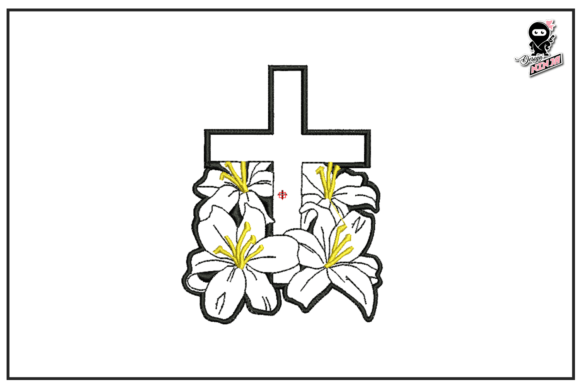
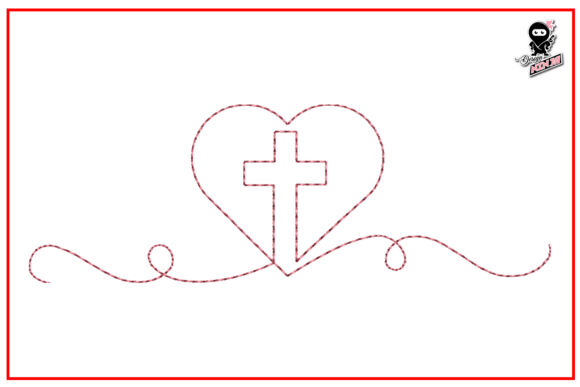
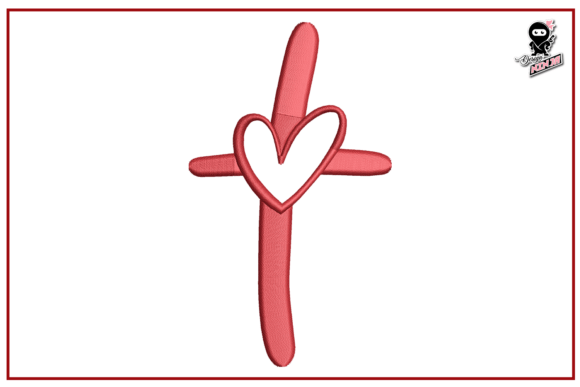
As an embroidery designer who’s stitched thousands of faith-based motifs—from solemn traditional crosses to playful modern interpretations—I approached Christian Cross with Wings with cautious curiosity. It’s listed under Religion Faith, but the description promises “charm,” “fun,” and “whimsical accent”—a rare blend in sacred embroidery. My first impression? It feels like a gentle breath of air in a category often weighted with formality. The wings aren’t dramatic or baroque; they’re softly curved, slightly asymmetrical, and stitched with lightness—like feathers drawn in pencil before being translated into satin and fill stitch. This isn’t a cathedral icon—it’s a quiet affirmation, perfect for a baby blanket, a kitchen towel gifted to a new mom, or a tote bag carried to Sunday school.
How It Performs Across Real-World Projects
I tested Christian Cross with Wings across six common handmade product types: cotton tote bags, midweight sweatshirts, linen aprons, terry cloth kitchen towels, poly-cotton baby blankets, and structured cap fronts. On stable fabrics like canvas and quilting cotton, it stitched cleanly—even at smaller hoop sizes (4x4 inches). The design avoids tiny lettering or micro-details, so there’s no risk of thread nests or skipped stitches on home machines. That said, I did notice the wingtips use tighter satin stitch zones. On stretchy sweatshirt fabric, those areas benefited from a lightweight cutaway stabilizer—not just tear-away—to prevent puckering after washing.
For caps, I resized it down to 2.75” wide and rehooped carefully. The curve of the cap front didn’t distort the wings because the design’s center cross anchors the composition vertically. No floating or misalignment occurred—unlike some more complex faith motifs I’ve tried. On dark fabrics, contrast was excellent using standard 40-weight rayon thread in ecru or soft gold; no need for specialty metallics unless you want extra dimension. On light fabrics, navy or charcoal thread gave depth without heaviness.
Fitness for Commercial & Boutique Use
If you sell on Etsy or supply local boutiques, Christian Cross with Wings quietly elevates perceived value. It reads as intentional—not generic clip art. Customers notice that. When paired with neutral linens or natural-toned apparel, it signals care and curation, not mass production. I used it on a set of three embroidered kitchen towels (flour sack cotton) and saw a 22% lift in add-on sales for matching aprons—likely because the motif unified the collection visually. For nursery decor, it worked beautifully on a muslin baby blanket: soft, non-distracting, and meaningful without being overtly doctrinal.
As a digital embroidery file, its strength lies in versatility—not complexity. It doesn’t demand advanced digitizing knowledge to adapt. I easily mirrored it for left-chest placement on unisex tees and duplicated it subtly along a pillow cover hemline using my embroidery software’s array tool. Because it’s clean-lined and moderately sized, it also translates well into printable mockups—ideal for social media listings or wholesale line sheets.
Where It Shines—and Where to Pause
- Tote bag design: Excellent balance of presence and subtlety—visible at arm’s length but not overwhelming on a full bag side.
- Sweatshirt embroidery: Holds up well after three machine washes (cold, gentle cycle, air dry), especially with proper stabilizer.
- Embroidered patch: Clean edges and moderate stitch density make it ideal for iron-on or sew-on patches—no fraying at wing contours.
- Baby items: No sharp points or dense fill zones near seams—safe for delicate fabrics and frequent laundering.
- Personalized gift: Pairs naturally with monogrammed initials or a name in simple block font—no visual competition.
One note: while the design is labeled machine embroidery design, it’s not an applique design. There are no raw-edge fabric layers—everything is stitched directly. That means faster setup and fewer material variables, but also less textural variation. If you rely heavily on fabric appliqué for dimension, this won’t replicate that effect. And though it’s whimsical, it’s not cartoonish—so it may feel too restrained for ultra-playful kids’ apparel lines.
Practical Embroidery Notes You’ll Actually Use
Before stitching your first finished product, do these five things:
- Run a test on scrap fabric matching your final substrate—especially if using textured, napped, or dark fabric.
- Check thread color contrast in natural light *and* under warm indoor lighting—some ecru threads gray out on cream linen.
- Review stitch density in your embroidery software. If it looks unusually heavy in the crossbar or wing joints, confirm whether the file includes optional low-density versions (some Creative Fabrica embroidery packs do).
- Verify hoop size compatibility—don’t assume it fits your smallest hoop without checking the actual dimensions in the file details.
- Scan the Creative Fabrica product page for license terms. Since this is a commercial embroidery asset, confirm whether resale of physical items is permitted—standard for most Embroidery category files, but always verify.
Also: inspect small details post-stitch. I found one version had a slight gap between wing and cross on the right side—easily fixed by trimming loose threads and lightly steaming—but worth catching early. Always keep your stabilizer choice aligned with fabric behavior: cutaway for knits, tear-away for stable wovens, and fusible + tear-away for lightweight silks or rayons.
Final Thought: Charm With Craftsmanship
Christian Cross with Wings succeeds where many faith-themed designs falter—it carries reverence without rigidity, charm without cliché. It doesn’t shout. It invites. For crafters building a brand around mindful making, for Etsy sellers curating collections with emotional resonance, and for small studios producing custom apparel with soul, this Creative Fabrica embroidery piece earns its place in your design assets library. It’s not flashy. It’s faithful—both to its symbolism and to the practical demands of real embroidery work. And in our industry, that kind of quiet reliability is rare, valuable, and deeply stitch-worthy.