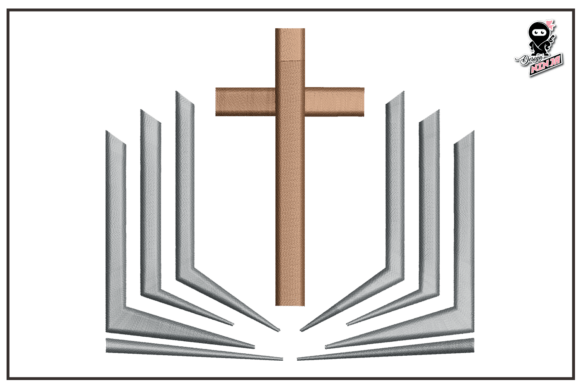
Bible and Christian Cross Embroidery Design
A Practical Review for Small Business Merchandise & Branded Patches
As an embroidery designer who’s developed hundreds of commercial designs for small businesses—from boutique florists to faith-based bakeries—I approached the Bible and Christian Cross machine embroidery design with both creative curiosity and production pragmatism. The title alone signals clear intent: this isn’t a decorative motif—it’s a statement of identity, reverence, and resonance. For small business owners, Etsy sellers, apparel decorators, and craft brands building intentional brand identity, this design carries weight—not just symbolically, but operationally.
First Impression: Classic, Reverent, and Professionally Grounded
The phrase “Beautiful embroidery design featuring a Bible with a Christian cross, symbolizing faith and devotion” tells me this is intentionally classic, not trendy—designed to endure, not expire. It avoids cartoonish simplification or overly ornate flourishes, suggesting thoughtful balance between clarity and spiritual dignity. That makes it highly adaptable: it reads as warm and approachable on a handmade tote bag, yet polished enough for staff aprons at a Christian counseling studio or chest embroidery on custom apparel for a church-run coffee shop. It leans into elegant simplicity, not rustic charm or modern minimalism—so it pairs naturally with natural fibers, linen blends, cotton twill, and structured caps without visual conflict.
Real-World Performance Across Business Applications
In practice, the Bible and Christian Cross excels where many religious motifs falter: consistency across scale and surface. As an embroidered patch, it holds strong definition even at 2.5" width—ideal for iron-on application on denim jackets, tote bags, or uniform sleeves. On staff uniforms—especially in faith-aligned small business merch like a bakery offering “Grace & Gluten-Free” treats—it communicates shared values without overt proselytizing. As cap embroidery, it works cleanly on front panels when digitized with moderate stitch density and balanced fill-to-outline ratios.
For apron embroidery, its centered symmetry lends itself well to chest placement, reinforcing professionalism while honoring mission. On tote bag design, it serves as a subtle yet unmistakable brand marker—especially effective when paired with a small business name in complementary typography (not embedded in the design itself, so you retain full layout control). And for customer gifts or event merch—like Easter outreach kits or retreat swag—the Bible and Christian Cross elevates perceived value; it feels intentional, not generic.
Where to Use It Thoughtfully (and Where to Pause)
Like any strong emblem, this design demands context-aware execution. Avoid scaling it below 1.75" for patches—fine details in the Bible’s spine or cross grain may collapse or blur, especially on textured fabric like canvas or terry cloth. Cap embroidery requires careful hoop size planning: confirm the file fits standard 4x4 or 5x7 hoops before digitizing adjustments. On dark uniforms, thread colors must be chosen deliberately—cream or ecru against navy reads softer than stark white, preserving reverence over contrast.
High stitch density can be a double-edged sword: while it enhances richness, it also increases bulk on lightweight fabrics and may compromise flexibility on curved surfaces like baseball caps or tapered tote straps. Always test the machine embroidery design on your actual fabric—especially if using performance blends or moisture-wicking materials common in active-wear–adjacent branding. And because frequent washing is inevitable for aprons, work shirts, and reusable totes, verify that stabilizer choice supports durability without stiffness.
Brand Identity Impact: Trust, Recognition, and Emotional Resonance
This isn’t just decoration—it’s a trust signal. When a local pet brand embroiders the Bible and Christian Cross on bandanas for rescue volunteers, or a floral shop adds it to delivery totes alongside “Bloom With Belief,” customers instantly recognize alignment—not just aesthetically, but ethically. That builds loyalty faster than slogans ever could. Visually, it reinforces consistency across touchpoints: same design on packaging accents, staff badges, and printable mockups means cohesive storytelling.
For handmade product sellers on Etsy, it adds authenticity and narrative depth—transforming a simple embroidered keychain into a meaningful keepsake. It also invites engagement: customers ask about meaning, share stories, and connect emotionally with the brand’s foundation. That’s measurable value—higher cart conversion, repeat orders, and organic word-of-mouth.
Practical Designer Notes Before You Stitch
- Test in black and white first: Confirm legibility and balance without color distraction.
- Check small-patch viability: Resize to 2" and inspect outline integrity and spacing—especially between Bible and cross elements.
- Review thread color contrast: Light threads on dark fabric need higher twist or matte finish to avoid glare; dark on light benefits from slight sheen for definition.
- Inspect spacing and kerning: Ensure no floating stitches or isolated fills that could snag during wear or washing.
- Confirm hoop size compatibility: Match the design’s outer dimensions to your most-used hoops—no last-minute resizing mid-production.
- Test on real fabric: Run a sample on your exact garment or patch substrate—not just stabilizer alone.
- Use proper stabilizer: Tear-away for stable wovens, cut-away for knits or stretchy blends, and fusible for lightweight linens.
- Create a client-ready mockup: Embed the digital embroidery file into a realistic printable mockup before presenting to small business clients.
- Compare beside other design assets: Does it harmonize with your logo, fonts, and secondary icons—or does it visually compete?
- Confirm commercial licensing: Since this is intended for commercial embroidery and small business merch, verify the license permits unlimited end-use production before bulk ordering or resale.
The Bible and Christian Cross belongs in the toolkit of any embroidery professional serving faith-aligned or values-driven brands. It’s more than a Religion Faith category staple—it’s a versatile, dignified, and production-smart embroidery asset. When applied with intention, it strengthens brand identity, deepens customer connection, and delivers a finished product that honors both craft and conviction.